|
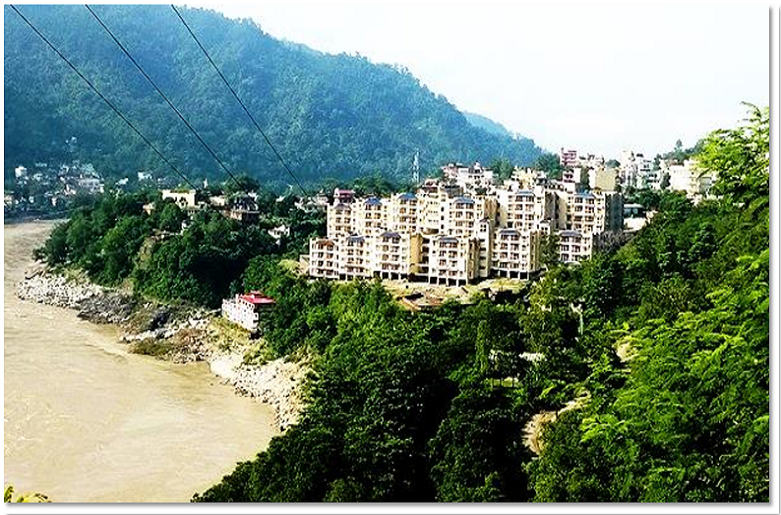
The holy town of
Rishikesh has the
eminence of being the
International capital of
Yoga and meditation.
Located in the foothills
of the Himalayas on the
banks of the River
Ganges, Rishikesh is
dotted with a number of
ancient temples, ashrams
and world renowned yoga
and meditation centers.
Not only devotees, but
travelers from all parts
of the world flock to
the sacred town for a
deeper understanding of
meditation. At the
ashrams in Rishikesh,
visitors can attend
lectures and courses
offered by celebrated
yoga and meditation
experts. Apart from
Hindu shrines, the town
of Rishikesh also
invites adventure lovers
from all around. It is
also the ideal gateway
for a pilgrim's chardham
yatra, that includes
traveling to Yamunotri,
Gangotri, Badrinath and
Kedarnath.
Rishikesh Ganga Aarti
Ganga Aarti
Evening in Rishikesh are
for sitting by the
Ganges and while away
your time. Later in the
evening, you headed
towards Parmarth Niketan
Ashram to witness the
daily evening ritual of
Ganga Aarti.
The aarti is a pleasant
ritual of worshipping
the Ganga. Around 50-100
people visit the aarti
on any day. You have
witnessed
Ganga
Aarati in other places
like Haridwar and
Varanasi too, but they
are a crowded noisy
ritual with loud
screaming speakers,
people troubling you to
make donations or
hawkers trying to sell
something highly
overpriced. The Aarti at
Rishikesh is a contrast
to it, held in a small
place with a few people
and is a relatively
quite affair. You can
sit quietly in a corner
and witness the ritual
or join the crowds
singing Bhajans with
them.
The Aarati happens at a
very picturesque place
on the banks of Ganga,
in front of a Shiva
statue built on the
river. You see some
activity beginning at
the riverbank around
5pm. People start
cleaning up the area,
lay carpets in
preparation for the
aarati.
A few people are seen
selling deep or diya - a
flower bowl with a wick
lamp to be floated down
the river during the
Aarti after prayers. It
starts at 5.30pm, with
children studying Veda,
the Bhajan singers and
the performers walking
into the ghat in front
of Parmarth Niketan. It
begins with Bhajans and
prayers for 'Ganga ji'
and Shiva.
It is interesting to
watch the children as
the ritual progresses.
They look bright and
alive in their saffron
robes. Some of them
appear oblivious of the
whole thing and drift
into their own world. A
few start a conversation
within themselves. Some
continue singing the
Bhajans with an
uninterested face and a
few are motionless, just
sitting there or staring
blankly. There are some
who are completely
immersed in the Bhajans
and join everyone with
full enthusiasm, singing
and clapping loudly with
the rhythm.
Places to Visit
Lakshmana Jhula :
one of the most visited,
the Lakshmana Jhula is a
suspended bridge,
extending from one bank
of the Ganges to the
other.
The bridge is
mythological significant
because it is where
Lakshmana crossed the
Ganga through on
jute-rope-made bridge.
Visitors can enjoy some
impressive views of the
Himalayan ranges from
upon the bridge. Today,
the Lakshmana Jhula
connects two popular
ashrams - Shivanand
Ashram and Swarg Ashram.
Ashrams in Rishikesh
:
Ashrams are a major
crowd-puller in
Rishikesh. These ashrams
offer regular courses
and classes on spiritual
disciplines like yoga
and meditation as well
as Ayurveda.
Accommodation facilities
are also available for
tourists and pilgrims
arriving at the ashrams.
Popular ashrams in
Rishikesh include Gita
Ashram (set up in the
1950s), Swarg Ashram
(one of the oldest in
the town) and Shivananda
Ashram (which houses the
Divine Life Society,
founded by Swami
Shivanand i 1936).
Bharat
Mandir :
Established
back in the 12th
century, the Bharat
Temple happens to be the
oldest in Rishikesh. The
temple stands in
dedication to Bharat,
the younger brother of
Rama (hero of the Hindu
epic Ramayana).
Though the original
temple structure was
destroyed in an invasion
by Temur in 1398, the
temple still preserves a
number of Hindu relics.
The inner sanctum of the
Bharat Mandir enshrines
the idol of Lord Vishnu.
The temple stands close
to the Triveni Ghat in
Rishikesh.
Triveni Ghat :
The most popular bathing
ghat in Rishikesh, the
Triveni Ghat is the
point where River Ganges
takes a complete right
angle turn. Hindus also
believe that it is here
that the three holy
rivers Ganga, Yamuna and
Saraswati converge.
Every morning, scores of
pilgrims and devotees
can be seen here taking
a holy dip in the divine
waters of the Ganga. In
the evening, the sight
at the ghat is simply
heart stirring. Vedic
chants, to the
accompaniment of drums
and bells, can be heard
all around and a
spiritual aura surrounds
the whole place. Tiny
oil lamps on bedecked
leaf boats floating on
the Ganges add much
charm to the whole
atmosphere.
Ram
Jhula :
The place (or the
bridge) is equally
popular with devotees
and tourists. It remains
suspended 3 km north of
Rishikesh town. It
attracts most visitors
due to the fact that it
lies just close to the
popular ashrams - Geeta
Bhawan and Swarg Ashram.
Visitors cannot afford
to miss the enchanting
evening prayer (which
lasts for 30 minutes) at
the Geeta Bhawan's ghat.
Food lovers can head
straight to the
50-year-old and the very
famous Chotiwala
Restaurant, located in
Ram Jhula.
Accessibility
By Air :
Nearest airport is Jolly
grant which is 18 km
away from Rishikesh and
is situated in Dehradun.
Jolly grant airport,
Dehradun is connected to
Delhi airport. Taxi
services are available
from airport to
Rishikesh. Delhi is well
connected to all major
cities in India and many
cities abroad.
By Rail :
Rishikesh railway
station is linked to all
cities in India. There
are regular train
facilities from
Rishikesh to cities like
Delhi, Mumbai, Dehradun
and Kotdwar.
By Road :
Rishikesh is well
connected to many cities
in the region by buses.
Private and public buses
offer services from
Rishikesh to Pauri (117
km), Haridwar, Dehradun
and Kotdwar.
|